Learn · Reading guide
The best Enneagram books, by what you want from them
19 books, read and sorted by purpose: where to start, where to go deeper, and which ones to skip until later. Each gets what it does well, who it’s for, and one honest limitation.
By Jon Horton · Updated
Start here
If you've just found your type and want one book, pick from these four. They're the ones people actually finish.
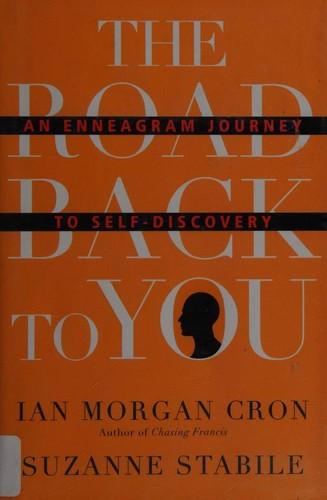
The Road Back to You
Ian Morgan Cron and Suzanne Stabile · IVP, 2016
This is the book most people's Enneagram started with, and for good reason. Cron writes like a friend telling you about people he knows, Stabile supplies decades of teaching, and the nine chapters move quickly enough that you'll read the ones that aren't yours too. Each type gets its fear and desire, how it looks in childhood, in relationships, and at work, and a short word on what growth asks of it.
It comes out of a Christian publishing house and says so, but the faith content is light and the psychology is sound. Read it in a weekend, then come back to the type pages with the stereotypes loosened.
- Best for
- A first book, especially if you learn through stories.
- One limitation
- Almost nothing on instincts or subtypes, and the portraits lean on the most familiar version of each type.
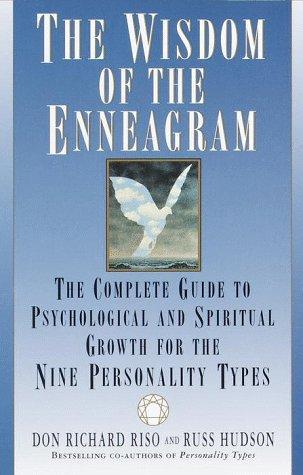
The Wisdom of the Enneagram
Don Richard Riso and Russ Hudson · Bantam, 1999
If you only own one Enneagram book, make it this one. Riso and Hudson lay out the whole system: the nine types with their core fears and desires, wings, the three instincts, the lines of growth and stress, and their nine levels of health for every type. Each chapter ends with practices rather than platitudes. Most type descriptions you read online, including parts of this site, stand on this book's shoulders.
It's long and it rewards slow reading. Keep it on the shelf and return to your own chapter once a year; it reads differently each time.
- Best for
- The one reference to own.
- One limitation
- Dense, and the levels of development can read as judgments when you're at a low point.
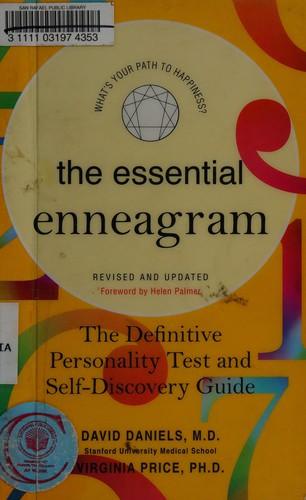
The Essential Enneagram
David Daniels and Virginia Price · HarperOne, 2009
Short, practical, and built around a test that works differently from most: you read nine paragraphs and choose the one that fits, then check your choice against the ones you nearly picked. Daniels taught at Stanford's medical school, and the book has that clean, unhurried feel. Each type gets a concise chapter and a few growth suggestions.
It's the book to hand someone who wants to confirm a type without a 400-page commitment, and a good second opinion if your test result was a close call.
- Best for
- Confirming your type quickly.
- One limitation
- Thin once you're typed; you'll want something deeper within a month.
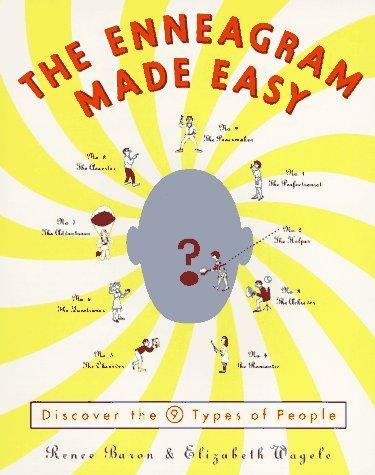
The Enneagram Made Easy
Renee Baron and Elizabeth Wagele · HarperOne, 1994
Cartoons, checklists, and a chapter per type you can read in ten minutes. It's the gentlest introduction in print, and it's the book people give to a spouse or a teenager who rolled their eyes at the idea. Wagele's drawings do real work: a good cartoon of a Six at a party teaches more than a paragraph.
Treat it as a door, not a destination. It gets the basics right and gets out of the way.
- Best for
- Skeptics, teenagers, and anyone who wants the gist in an hour.
- One limitation
- Surface-level by design, and some of the humor has aged.
Going deeper
For readers who already know their type and want the machinery: levels, subtypes, the source material.

The Complete Enneagram
Beatrice Chestnut · She Writes Press, 2013
The standard English book on the 27 subtypes, and the natural next step after our subtype pages. Chestnut works in Claudio Naranjo's lineage and gives each subtype its own portrait, including the countertypes that make so many people mistype. If you've ever read a description of your type and thought that's not quite me, this is the book most likely to explain why.
Each chapter also lays out a growth path for the type and for each of its three versions, which is where it earns its length.
- Best for
- Anyone who wants to understand their subtype properly.
- One limitation
- Long and structurally repetitive, and the subtype nicknames take some getting used to.
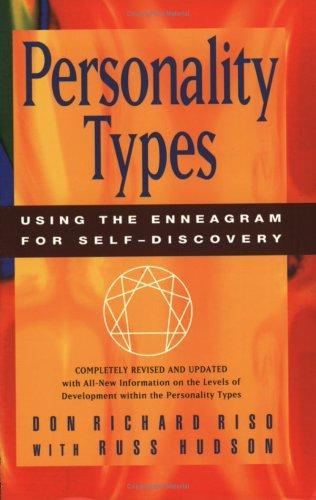
Personality Types
Don Richard Riso and Russ Hudson · Houghton Mifflin, 1996
The dense predecessor to The Wisdom of the Enneagram. This is where the nine levels of development for each type are set out in full, from the healthiest expression to the most troubled, with the shift between levels described step by step. It's the most complete map of how a type deteriorates and recovers that anyone has written.
Read it after Wisdom, not instead of it, and read your own chapter with some gentleness. The low levels are not a prediction.
- Best for
- Completists, counselors, and coaches.
- One limitation
- Heavy, and the lower levels can read as pathology rather than pattern.
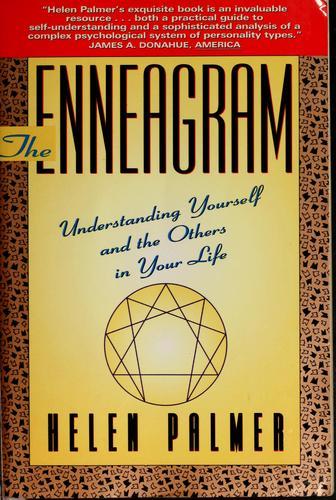
The Enneagram: Understanding Yourself and the Others in Your Life
Helen Palmer · HarperOne, 1991
Palmer founded the narrative tradition, in which the types are taught by panels of people describing their own experience, and this book carries that texture. Instead of a system imposed from outside, you get what a Five says it's like to be a Five. Her core idea is that each type is a habit of attention, and once you see your habit you can start to loosen it.
It overlaps less with Riso and Hudson than you'd expect, which makes it a good second voice.
- Best for
- Readers who want to hear the types in their own words.
- One limitation
- Less structured, dated in places, and the esoteric framing won't suit everyone.
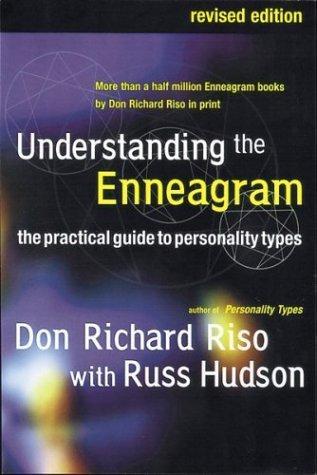
Understanding the Enneagram
Don Richard Riso and Russ Hudson · Houghton Mifflin, 2000
The companion volume: how the centers fit together, how to tell look-alike types apart, and a long section on misidentifications that's still the best thing in print on mistyping. If you're torn between two types, this and our comparison pages will usually settle it.
It assumes you've read one of the main Riso and Hudson books first.
- Best for
- Settling a close call between two types.
- One limitation
- Overlaps heavily with their other books; skip it if your shelf is already full.
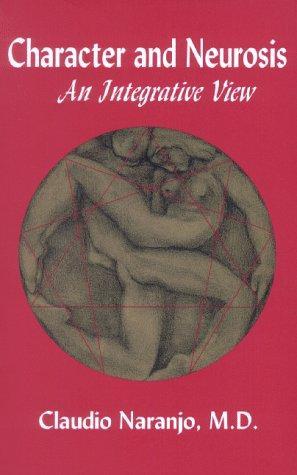
Character and Neurosis
Claudio Naranjo · Gateways, 1994
The source. Naranjo took the Enneagram from Oscar Ichazo's teaching into psychology, and this is where the modern subtype model and most of the language around passions and fixations come from. It is a psychiatrist's book, written in the vocabulary of its time, with each type mapped to the character structures and diagnoses of mid-century clinical literature.
Include it for provenance. Most readers will skim it; the few who need it will be glad it's on the list.
- Best for
- Scholars, therapists, and anyone who wants to know where the system came from.
- One limitation
- Clinical, difficult, and the word neurosis is doing a lot of work that modern readers may find off-putting.
Relationships
Loving someone of a different type (or the same one). These pair with our compatibility pages and the Couples Report.
The Path Between Us
Suzanne Stabile · IVP, 2018
Stabile's follow-up to The Road Back to You, aimed at how each type relates: what it needs, how it handles stress and security in a relationship, and what the people around it keep misreading. The stories are drawn from decades of workshops and couples, and the advice is specific enough to use the same evening.
It's about each type in relationship, not about specific pairings, so treat it as the foundation and our pairing pages as the detail.
- Best for
- Couples, close friends, and parents.
- One limitation
- Broad strokes by design; it doesn't take on the 45 pairings individually.
The Enneagram in Love and Work
Helen Palmer · HarperOne, 1995
Nobody else has done this: every one of the 45 type pairings, described at home and on the job. For each pair Palmer lays out the attraction, the predictable friction, and what each person has to learn to make it work. If you want to read about a Two with an Eight specifically, this is the book that has a chapter for you.
It was written in 1995 and shows it, but the dynamics it describes haven't changed.
- Best for
- Reading about your exact pairing.
- One limitation
- Dated examples, and the type portraits follow the narrative tradition, which differs in places from the descriptions you'll find here.
The Enneagram Guide to Waking Up
Beatrice Chestnut and Uranio Paes · Hampton Roads, 2021
A practical growth book: for each type, the authors describe the shadow (the parts of the pattern you don't see), three stages of waking up to it, and concrete things to practice at each stage, with notes for each subtype. It's the closest thing in print to a coaching program you can run on yourself.
It's the natural follow-on to a Full Profile, because it assumes you already know your subtype and want to do something with it.
- Best for
- Readers ready to work on the pattern, not just name it.
- One limitation
- Workbook pacing, and it assumes you know your subtype going in.
Spiritual and faith perspectives
The Enneagram spread largely through retreat houses and spiritual directors. These are the books from that stream, including one honest caveat.
The Sacred Enneagram
Christopher L. Heuertz · Zondervan, 2017
The most-read Christian treatment of the last decade. Heuertz frames the Enneagram as a map for contemplative prayer rather than a personality quiz, pairs each center with a prayer posture (solitude, silence, stillness), and introduces the harmony triads, a grouping of types across the three centers. It's warm, well written, and takes the inner work seriously.
Some of its theory, the harmony triads especially, is particular to Heuertz and his teachers rather than standard, so hold those parts a little loosely.
- Best for
- Christians who want a practice, not just a description.
- One limitation
- Parts of the framework are the author's own, and the history is told loosely.
The Enneagram: A Christian Perspective
Richard Rohr and Andreas Ebert · Crossroad, 2001
Rohr's book did more than any other to carry the Enneagram into churches. Built on the passions and virtues, it reads each type as a story of sin and grace, with the root sin named plainly and the way home described with real pastoral care. Pastors and spiritual directors still reach for it first.
One caveat we think is important: its history chapter repeats claims about desert-father and Sufi origins that later scholarship doesn't support. The modern Enneagram of types comes from Ichazo and Naranjo in the 1960s and 70s, as our history guide explains. Read the type chapters and treat the origin story as legend.
- Best for
- Pastors, spiritual directors, and readers who want the theological frame.
- One limitation
- The origin history isn't reliable; the type content is.
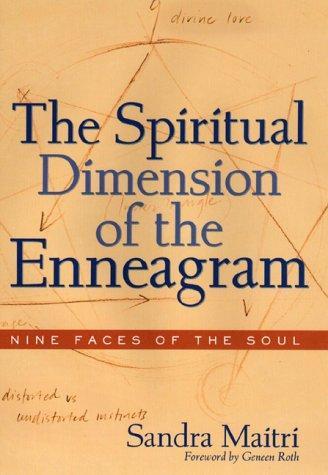
The Spiritual Dimension of the Enneagram
Sandra Maitri · Tarcher, 2000
Maitri writes from the Diamond Approach, the school founded by A. H. Almaas, and this is the clearest account of the holy ideas: the nine ways of seeing reality that each type has lost touch with, and that its passion is a reaction to. It is deep, non-dogmatic, and useful to contemplatives of any tradition or none.
It's abstract in places, and it helps to have read a plainer book first.
- Best for
- Contemplatives who want the view underneath the personality.
- One limitation
- Abstract, and the Diamond Approach vocabulary takes effort.
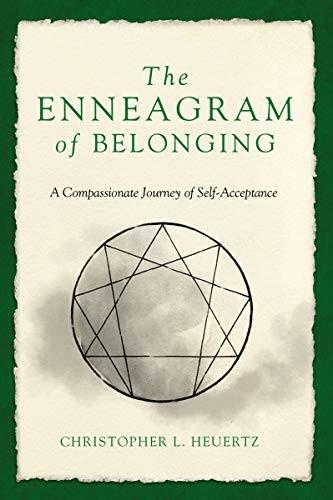
The Enneagram of Belonging
Christopher L. Heuertz · Zondervan, 2020
The follow-up to The Sacred Enneagram, focused on shadow work and self-compassion: how each type hides from itself, and how to meet that part with kindness instead of correction. It's gentler and more personal than the first book.
Read it if the first one landed; it builds on the same framework.
- Best for
- Readers who finished The Sacred Enneagram and want the next step.
- One limitation
- Overlaps with its predecessor and assumes you've read it.
Work and leadership
For managers, coaches, and teams. See also our page for coaches.
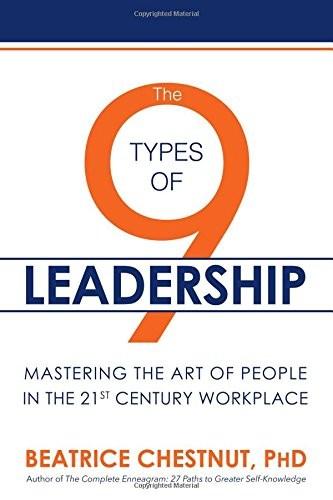
The 9 Types of Leadership
Beatrice Chestnut · Post Hill Press, 2017
Chestnut's business book: each type as a leader, with its strengths, blind spots, and the three subtype variations, plus how each type behaves on a team and under pressure. It's the book to give a manager who wants the Enneagram without the retreat-house vocabulary.
The subtype notes make it more useful than most workplace Enneagram books, which tend to stop at nine.
- Best for
- Managers, team leads, and coaches.
- One limitation
- Long for a business book, and the case-study framing can feel corporate.
Newer and popular
The books your friends own. Both are good at what they do; neither is where to learn the system.
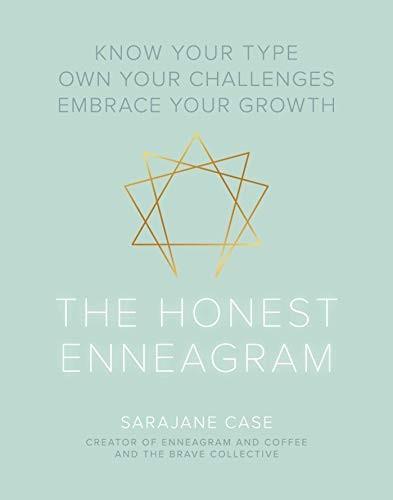
The Honest Enneagram
Sarajane Case · Andrews McMeel, 2020
From the Enneagram and Coffee account. Case writes with unusual kindness: each type gets its patterns at its best and under strain, and the emphasis throughout is on self-compassion rather than fixing yourself. It's short, beautifully produced, and the one younger readers already have.
It's light on theory on purpose. Pair it with Wisdom if you want the structure underneath.
- Best for
- A gift, and a gentle first read.
- One limitation
- Thin on how the system fits together.
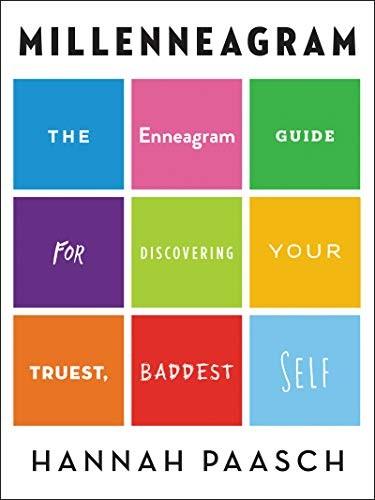
Millenneagram
Hannah Paasch · HarperOne, 2019
Irreverent, profane, and funny, with the types renamed (the Four becomes the Tortured Artist, the Eight the Dragon). Paasch is good on the lived experience of each type and sharp on how they behave online. If the earnest tone of most Enneagram writing puts you off, this is your door in.
The renamed types can make it harder to connect what you read here with what you read elsewhere, and the hot takes are hot by design.
- Best for
- Readers allergic to earnestness.
- One limitation
- Strong language, strong opinions, and its own names for the types.
How to choose
Match the book to the question you’re asking. What’s my type? Start with Cron and Stabile or Daniels and Price, then confirm with the free test. Why do I do this? That’s Riso and Hudson. Why don’t I match my type’s description? Chestnut, and our subtype pages. How do I love this person? Stabile, then Palmer for your exact pairing. How do I pray with this? Heuertz or Rohr, with the caveat above.
Two things no book on this list will do. None of them knows your scores, so none can tell you which of the three versions of your type you are, or how your wing and tritype play together in you specifically. That’s what the Full Profile is for. And none of them replaces a conversation with someone who knows you well. Read, then ask.
Free · 8 minutes · no sign-up
Know your type before you buy a book about it.
Take the free test: 90 statements, about 8 minutes. You'll get your type, wing, and center types in a report that's yours to keep.
Take the free test